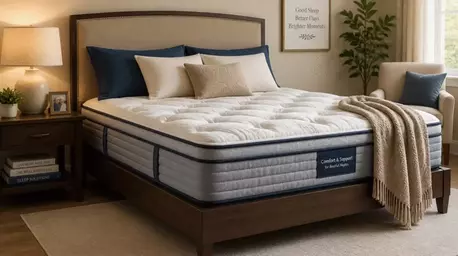
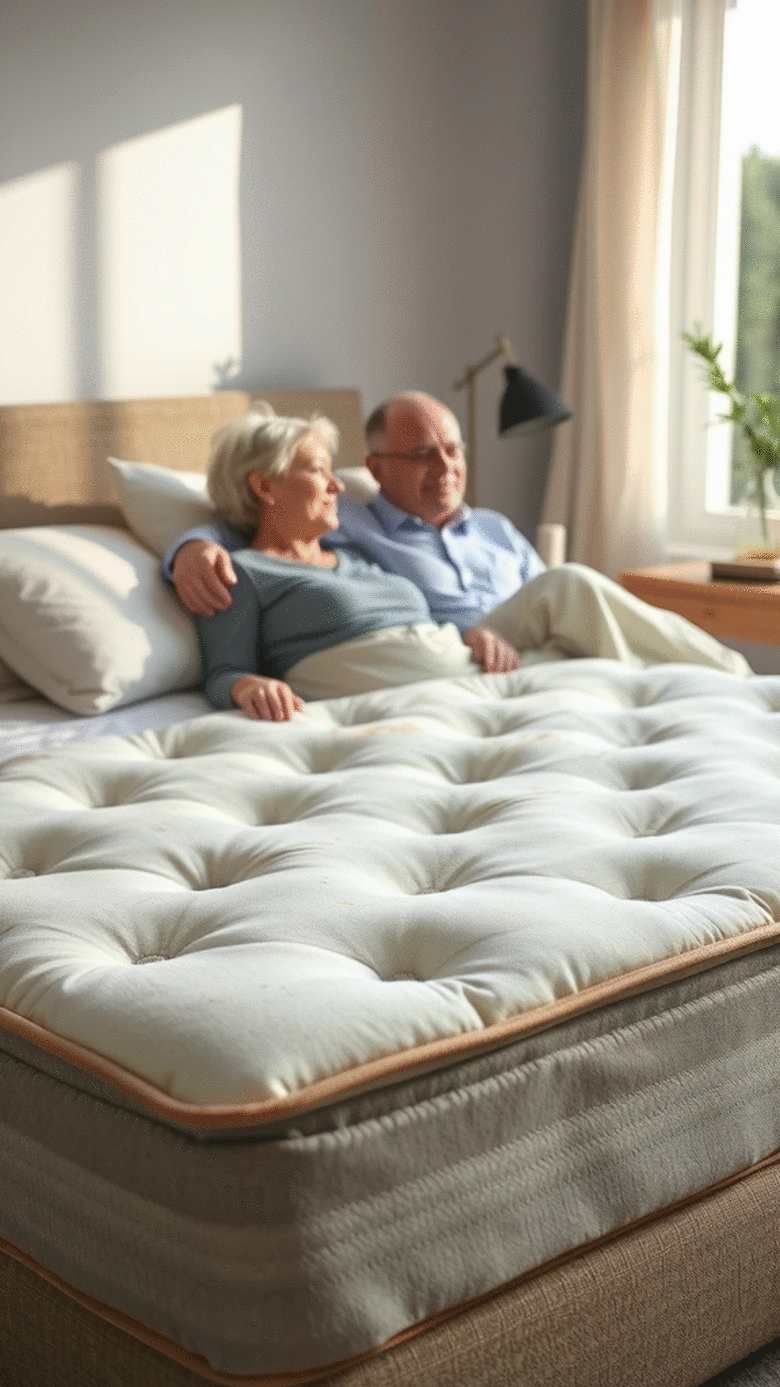
Mattress Age and Sleep Quality
Have you ever woken up feeling more tired than when you went to bed? The culprit may be right beneath you—your mattress. Understanding the role that mattress age plays in sleep quality is crucial for seniors seeking better rest. Let’s explore some essential insights on how to choose the right mattress and the signs that indicate it’s time for a replacement.
What You Will Learn
- Mattress Lifespan: Most mattresses last about 7-10 years before their quality declines, impacting sleep comfort.
- Impact on Health: A worn mattress can lead to sleep disruptions, worsening physical health conditions such as arthritis and back pain.
- Signs of Wear: Look for visible sagging, noisy springs, or increased allergies as indicators that your mattress needs replacement.
- Choosing Wisely: Select a mattress that offers the right firmness and material, tailored to the specific needs of seniors for improved support.
Understanding the Impact of Mattress Age on Senior Sleep Quality
Have you ever thought about how old your mattress is? Many of us forget that just like everything else, mattresses have a lifespan. As a dedicated sleep consultant at Senior Sleep Guide, I often see how the age of a mattress can significantly affect the quality of sleep for aging adults. In this article, let's dive into how an aging mattress can impact your sleep and what you can do about it!
Typically, a mattress lasts about 7-10 years before it starts to show signs of wear and tear. After a decade, many people experience discomfort due to sagging, lumps, or even allergens trapped in older materials. So, why is this important? Well, poor sleep quality can lead to numerous health issues, especially for seniors. Let's explore some critical points about mattress age and your sleep.
- Comfort Level: An old mattress loses support, leading to discomfort during the night.
- Sleep Disruptions: Worn-out mattresses can cause tossing and turning, interrupting deep sleep.
- Allergens: Older mattresses may harbor dust mites and allergens that can affect breathing.
- Physical Health: Poor sleep can exacerbate issues like arthritis, back pain, and mobility problems.
Signs That Your Mattress Needs Replacing
So, how can you tell if your mattress has seen better days? There are a few signs to look out for that indicate it might be time for a change. Being aware of these can help you maintain better sleep quality, which is vital for your overall health.
First, consider how you feel each morning. Do you wake up tired or achy? This might be your mattress speaking! Here are some other common signs that indicate your mattress may need to be replaced:
- Visible Sagging: If your mattress is sagging in the middle or has noticeable lumps, it's time for a new one.
- Noisy Springs: A mattress that squeaks or creaks can be a sign that it’s deteriorating.
- Allergic Reactions: If you notice increased allergies or respiratory issues, your mattress may be to blame.
- Age: If your mattress is more than 7 years old, start considering a replacement.
Choosing the Right Mattress for Seniors
When it comes to selecting a new mattress, it’s essential to choose one that caters to the specific needs of seniors. A comfortable and supportive mattress can make a big difference in sleep quality. Here are some factors to consider when making your choice:
- Firmness Level: Depending on your sleeping position, the firmness of the mattress should provide adequate support.
- Material: Look for mattresses made of memory foam, latex, or hybrid materials for better comfort.
- Weight: Make sure the mattress can support your weight without sagging.
- Trial Period: Many brands offer trial periods, so you can test the mattress before committing.
Investing in a quality mattress will not only improve your sleep but can also enhance your quality of life. At Senior Sleep Guide, I encourage seniors to prioritize their sleep by making informed choices about their mattresses!
Frequently Asked Questions
- What is the average lifespan of a mattress? Most mattresses last between 7-10 years before their quality starts to decline.
- How can a worn mattress affect my health? A worn mattress can lead to sleep disruptions and exacerbate physical health conditions like arthritis and back pain.
- What are the signs that I need to replace my mattress? Look for visible sagging, noisy springs, increased allergies, and discomfort upon waking.
- What should I consider when buying a mattress for seniors? Consider firmness level, material, weight capacity, and whether a trial period is offered.